

Table of Contents
- What You'll Need Before You Measure ATV Tire Size
- How to Read ATV Tire Sidewall Markings
- Step-by-Step: How to Measure ATV Tire Size on the Vehicle
- ATV Tire Size Chart: Matching Numbers to Real Measurements
- ATV Tire Ply Rating Explained
- Common Mistakes When Measuring ATV Tire Size
- Frequently Asked Questions
Last Updated: September 23, 2026
What You'll Need Before You Measure ATV Tire Size
Knowing how to measure ATV tire size starts with two simple tools and a flat surface. You need a flexible tape measure, a straight edge or level, and a way to lift the machine so the tire hangs free.
Gather these before you start:
- A flexible tape measure (cloth or steel)
- A straight edge, ruler, or spirit level
- A tire pressure gauge
- A jack or lift stand
- A pen and paper, or your phone
- A flashlight for reading faded sidewall text
How to Read ATV Tire Sidewall Markings
Sidewall markings give you the factory size in a standard format, and they are the fastest place to start. Look for a string of numbers and letters near the bead, usually on the outer face of the tire.
Decoding the Three-Number Format
The three-number format is the standard for most ATV tires sold today. It reads as height, width, and rim diameter.
|
Position |
Example |
What It Means |
|---|---|---|
|
First number |
25 |
Overall height in inches |
|
Second number |
8 |
Section width in inches |
|
Third number |
12 |
Inner wheel diameter in inches |
Metric and Imperial Sizing on the Same Sidewall
Some tires show both metric and imperial numbers. A metric marking like 205/80-12 breaks down differently:
- 205 is the section width in millimetres
- 80 is the aspect ratio, meaning the sidewall height is 80 percent of the width
- 12 is the rim diameter in inches
Step-by-Step: How to Measure ATV Tire Size on the Vehicle
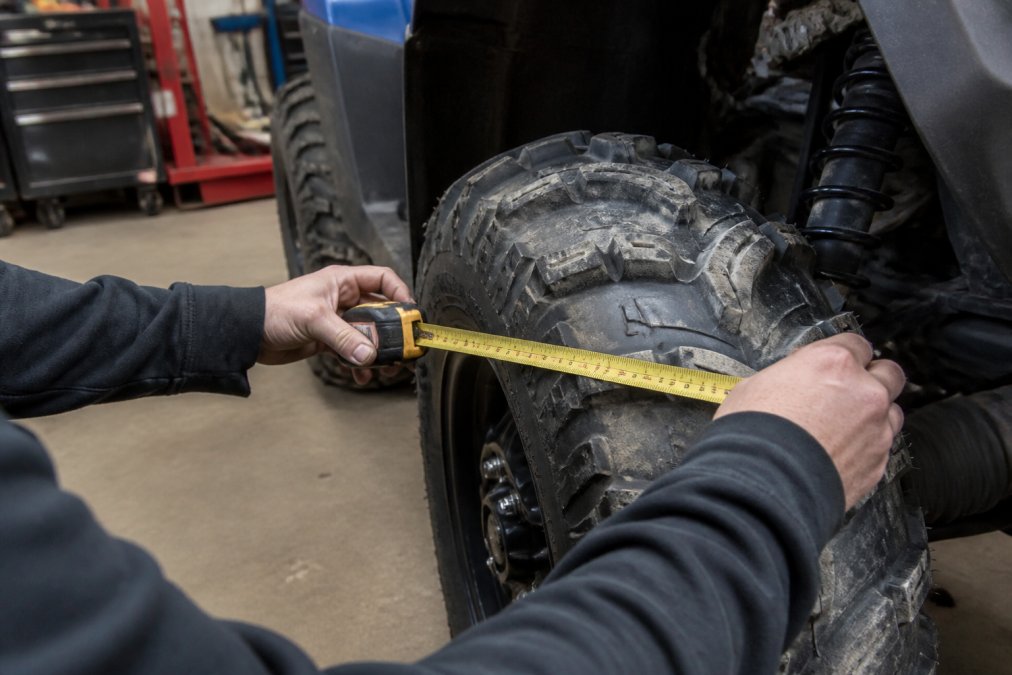
The only way to get a true number is to measure the tire on the machine. Nominal sidewall numbers are a starting point, not a guarantee. Here is the process.
- Park on a flat, hard surface and set the parking brake.
- Lift the axle so the tire spins freely.
- Check and set tire pressure to your normal riding level.
- Measure the diameter across the center of the tread.
- Measure the width at the widest point of the sidewall.
- Measure the rim from bead seat to bead seat.
- Check clearance to the fender, suspension, and frame.
- Write every number down before you lower the machine.
Measuring Diameter, Width, and Rim Size
Diameter is the overall height of the tire. Run your tape from the ground line straight up to the top of the tread, passing through the center of the wheel. Do this at two or three points around the tire and average the results, because tread wear and mold variance cause small differences.
Checking Actual Clearance and Wheel Offset
Clearance is the gap between the tire and the closest fixed part: fender, control arm, sway bar, or frame. Turn the bars lock to lock and check for rub at full steering angle. Then compress the suspension by hand and check again.
ATV Tire Size Chart: Matching Numbers to Real Measurements
A size chart is a starting point, not an answer. The number printed on the sidewall is a nominal size, and nominal sizes drift. A tire marketed as 25 inches can measure somewhere between 24.2 and 25.5 inches depending on brand, mold, tread depth, and inflation. That half-inch spread can be the difference between a clean fit and a fender rub.
|
Nominal Size |
Expected Height (in) |
Expected Width (in) |
Rim (in) |
Common Use |
|---|---|---|---|---|
|
22x7-10 |
21.5 to 22.3 |
6.7 to 7.2 |
10 |
Sport ATV front |
|
25x8-12 |
24.4 to 25.4 |
7.6 to 8.3 |
12 |
Utility quad front |
|
25x10-12 |
24.4 to 25.4 |
9.5 to 10.4 |
12 |
Utility quad rear |
|
26x9-14 |
25.4 to 26.4 |
8.6 to 9.3 |
14 |
Sport SxS front |
|
27x11-14 |
26.3 to 27.4 |
10.5 to 11.4 |
14 |
Utility SxS rear |
|
27.3 to 28.5 |
9.5 to 10.4 |
14 |
Utility SxS, lifted |
|
|
30x10-14 |
29.2 to 30.6 |
9.5 to 10.4 |
14 |
Big-bore utility, mud |
How to Reconcile the Chart With Your Tape
Once you have measured your mounted tire, compare the result to the chart. Three outcomes matter:
- Measured within 0.3 in of nominal: the tire is true to size. Order the same nominal size for a replacement.
- Measured 0.3 to 0.8 in under nominal: the tire runs small. If you are upgrading, you can often step up one nominal size and still clear the same fender gap.
- Measured more than 0.8 in under nominal: the tire is a significant undersize. Do not assume a same-size replacement will match your current clearance, measure the new tire's published specs before ordering.
ATV vs. UTV Sizing and Sport vs. Utility Tires
ATV and UTV tire sizing uses the same three-number format, but the numbers differ. ATVs run smaller rims, often 10 to 12 inches. Side-by-sides use 14-inch rims more often and carry wider, heavier tires.
ATV Tire Ply Rating Explained
Ply rating tells you how tough the tire carcass is. A higher ply rating means more layers of cord and better resistance to punctures and pinch flats. It also means more weight, and that weight sits in the worst possible place: below the suspension, spinning with the wheel.
- 2-ply: light, soft, best for sport ATVs on groomed trails
- 4-ply: general trail use, lighter utility work
- 6-ply: the common choice for utility quads and mixed terrain
- 8-ply and up: heavy utility, forestry, and rocky ground
Why Ply Rating and Tire Weight Matter More Than Most Guides Admit
Every pound you add at the tire is worth roughly several pounds of static weight when it comes to acceleration and braking, because the drivetrain has to spin that mass up to speed and the brakes have to slow it down. This is unsprung mass, and it sits below the springs, so it also moves with every bump instead of being controlled by the suspension.
- Slower acceleration. A heavier tire set raises the rotating inertia the engine and clutch must overcome. Riders who jump from a 4-ply 25-inch tire to an 8-ply 27-inch tire often notice the machine feels down on power, especially in low range.
- Longer braking distances. More rotating mass takes more brake force to stop. On a heavy utility quad, this is felt most on descents and when loaded.
- More drivetrain wear. CV joints, axles, and the belt or gearbox all see higher loads. A common pattern is accelerated CV boot and axle wear after a significant tire weight increase without a regear or clutch adjustment.
- Harsher ride on small bumps. Unsprung mass resists the suspension's ability to follow the terrain, so washboard and roots transmit more to the chassis.
Common Mistakes When Measuring ATV Tire Size
Most sizing errors come from a handful of habits. Fix these and your next fitment order will be right the first time.
- Measuring a flat tire. Low air makes the tire read short. Inflate first.
- Trusting the sidewall only. Nominal sizes vary by brand. Measure the real tire.
- Ignoring wheel offset. A new rim with a different offset changes clearance.
- Forgetting lift kits. A lift changes geometry and can open or close clearance.
- Skipping the compressed check. Rub only shows up when the suspension moves.
- Mixing metric and imperial. Convert carefully, or measure in one system.
- Overlooking tire weight. Bigger, heavier tires load the drivetrain and brakes.
Frequently Asked Questions
How do you tell the size of ATV tires?
Look at the sidewall markings, which show the size as three numbers like 25x10-12. The first number is overall diameter, the second is section width, and the third is the rim diameter. If the sidewall is worn or unreadable, measure the tire with a tape: height from ground to top, width across the tread, and the inner wheel diameter where the bead sits.
What does the size 25x10x12 on an ATV tire mean?
The 25 is the overall tire height in inches, the 10 is the section width in inches, and the 12 is the wheel (rim) diameter in inches. So a 25x10-12 tire stands roughly 25 inches tall, measures about 10 inches wide, and mounts on a 12-inch rim. The same format applies to 25x8x12, except that tire is narrower at 8 inches.
Can I put larger tires on my ATV without modifications?
Sometimes, but it depends on clearance. Going up one inch in diameter usually fits, but wider or taller tires can rub the fenders, suspension arms, or inner wheel wells. Check the gap between the tire and the closest suspension or body part at full steering lock and full suspension compression. A lift kit or wheel offset change may be needed for larger sizes, and taller tires also alter gearing and add unsprung mass.
How do I know if a tire will fit my rim?
Match the rim diameter in the tire size to your wheel. A tire ending in -12 needs a 12-inch rim. Also check the rim width against the tire's recommended range, and confirm the bolt pattern and wheel offset match your hub. If you are unsure, a tire size chart for your specific model is the fastest way to confirm fitment before ordering.
Getting the numbers right takes ten minutes and saves a return shipment. Measure the mounted tire, confirm the rim size, and check clearance under compression before you buy. SiC Powersports Ltd. carries a focused catalog of ATV and side-by-side wheels and tires with fitments for the major brands, plus free shipping across Canada on nearly everything we stock. Subscribe to our emails for fitment guides and new arrivals, and get your next set of tires right the first time.